Dr. Brhane Gebrekidan, Independent Consultant
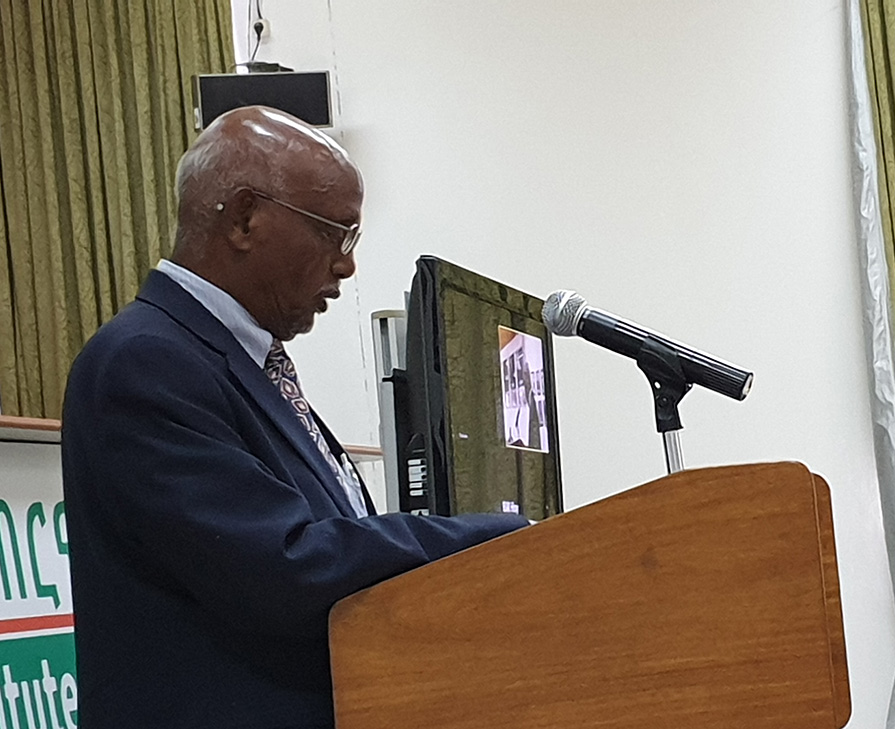
My opening remarks revolve around six topics which I believe are relevant as background information for the overall theme of this symposium.
- 1. “Ethiopia, Land of Origins” new branding of the country by the Ethiopian Tourist Organization
- Origin of humans in Ethiopia in the general area of the Afar Triangle is well recognized and documented. Ethiopia is often referred to as cradle of humanity, skeleton of Lucy is found in the Ethiopian National museum here in Addis.
- Referring to crops, Ethiopia is one of the eight Vavilovian Centers of crop origin and diversity with the main examples given below:
| Cereals | Legumes | Oil crops | Stimulants |
| Barley | Chick pea | Flax | Coffee |
| Wheats (dif. types) | Lentils | Sesame | |
| Tef | Field pea | Noug | |
| Sorghum (4 of 5 races) |
- Along with the Fertile Crescent of Mesopotamia, many agricultural crops have been domesticated in Ethiopia.
- Ethiopia has one of the few National Crop Gene Banks in Africa, the former Plant Genetic Resources Center / Ethiopia (PGRC/E), now the Bio-Diversity Institute (BDI)
- 2. Diverse Ecology
- Hottest place on earth – The Danakil Depression
- Africa’s high altitude crops ecology is mostly in Ethiopia
- Ethiopia is a country of 13 months of sunshine in a year, popular branding by the Ethiopian Tourist Organization, using the Ethiopian Calendar.
- 3. Education and Science in Ethiopia
- Ethiopia is an ancient country and one of the oldest nations in the world
- Historically the country has used the Ethiopian Orthodox Church as its center of education and knowledge
- Ethiopia has its own unique script and alphabet, the only indigenous system in Africa
- Modern agricultural education and science are recent in Ethiopia
- Began in the early 1950s when there was not a single Ethiopian with BSc agricultural degree
- Alemaya College emerged as the pioneer agricultural education, research, and extension national center
- 4. Research and Higher Education in Agriculture in Ethiopia now
- There are over 50 federal public universities, most of which have Faculties of Agriculture. In addition, there are a large number of Agricultural and Technical Vocational Training Centers scattered throughout the country
- In the research area, there are Federal (EIAR) and Regional Agricultural Research Institutes (RARIs)
- Private sector entities and NGOs dealing with research and technology are also abundant throughout the country.
- 5. Current Status of Agricultural Sciences in Ethiopia
- High level trained human resources in universities and research institutes are now abundant where an estimated over 90% are Ethiopians.
- Science based technologies such as high yielding varieties (HYVs), hybrids and open pollinated cultivars, have been developed and extended to producers
- Inputs such as fertilizers and pesticides along with recommended rates, time and methods of application have reached farmers
- In the mechanization area, there are few uses of tractors, combines, improved implements and machinery
- Overall improved farm management practices are used by progressive farmers
- 6. Trained Ethiopians in the Diaspora
- High level Ethiopian scientists are spread out internationally also, mostly in the CGIAR system and universities and research centers in North America and Europe. Many of them are making significant contributions to Ethiopia’s agricultural development from their respective bases.
- Some notable examples I am aware of are:
- Distinguished Professor Gebisa Ejeta, Purdue University, USA
- Professor Tilahun Yilma, University of California, Davis, USA
- Dr. Segenet Kelemu, DG of ICIPE, Kenya
- Dr. Abebe Menkir, Maize Breeder, IITA, Nigeria
- Dr. Zerihun Tadele, Crop Breeding and Genetics Group Leader, University of Bern, Switzerland, convener and organizer of this symposium
I would like to end these opening remarks by expressing my special appreciation to Dr. Zerihun Tadele for successfully organizing this unique 2nd Symposium on Advances in Agricultural Sciences with a focus on issues relevant to Ethiopian agricultural development. Congratulations and well done Dr. Zerihun.
 Advances in Agricultural Science Forum of Ethiopia (AASFE)